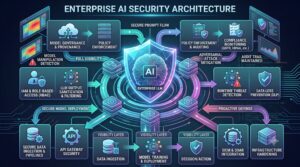
The Enterprise AI Security Architecture for 2027
By 2027, enterprise AI security will look very different from traditional cybersecurity. The enterprise will no longer be protecting only users, endpoints, and applications —

By 2027, enterprise AI security will look very different from traditional cybersecurity. The enterprise will no longer be protecting only users, endpoints, and applications —
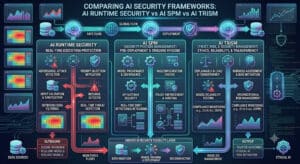
These three terms describe overlapping but different parts of the emerging AI security market. The simplest distinction: AI-SPM = Where is my AI? Is it
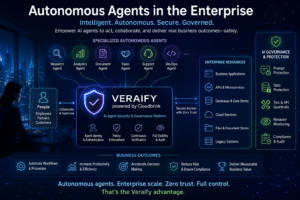
Autonomous AI agents represent a major shift in enterprise computing. The next phase of AI is moving beyond chat interfaces that answer questions toward agents
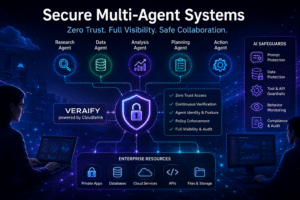
Multi-agent systems introduce a new security challenge: instead of protecting communication between humans and applications, enterprises must protect interactions between multiple autonomous AI agents that
AI agents need identity because they are becoming autonomous actors inside enterprise environments. Unlike traditional software that waits for a human to click a button,
AI agents change the security model because they are no longer just applications — they are autonomous actors that can access data, call tools, interact
AI infrastructure security is moving beyond traditional cybersecurity models. The next generation of security must protect not only users and applications, but also AI models,
For years, enterprise networking and security architectures were designed around predictable patterns. Employees accessed applications through browsers, SaaS platforms, VPNs, and corporate networks. Traffic was
As organizations race to deploy AI, most security discussions focus on models, prompts, data protection, and governance. Yet one of the most critical components of
Artificial Intelligence is rapidly moving from experimentation to everyday business operations. Employees are using AI assistants, developers are building AI-powered applications, and organizations are deploying